Gratitude Affirmations
Gratitude stops working the moment it becomes an obligation to feel fine. Being grateful for what's good doesn't require pretending nothing is wrong.
Six affirmations for noticing the good
The evidence for gratitude practice is reasonably good, but it's frequently misapplied as a way to shut down complaint — which produces the opposite of gratitude. It works best when it's specific and additive rather than comparative: noticing a particular thing that was good today, not reminding yourself that others have it worse. 'At least' is where gratitude turns into dismissal.
How Anchor writes yours
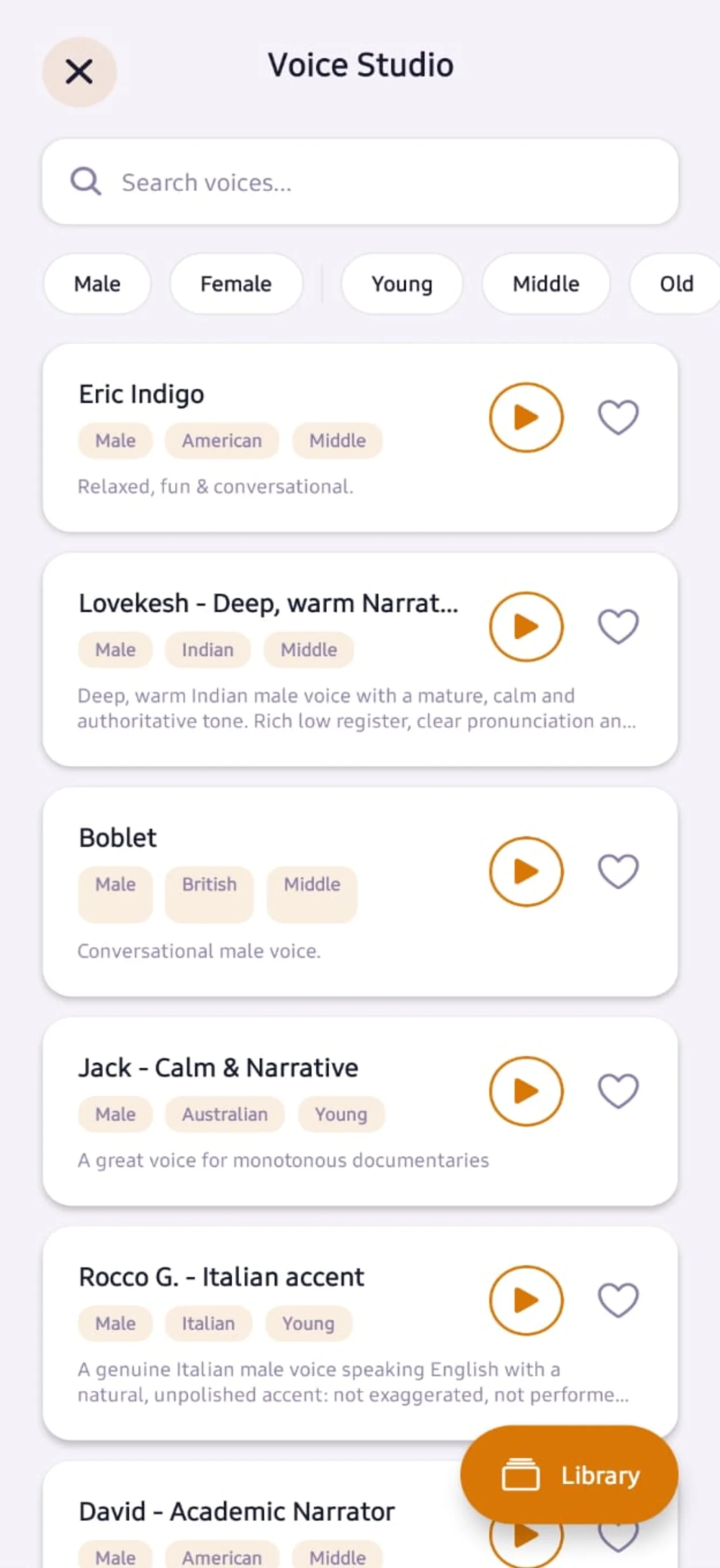
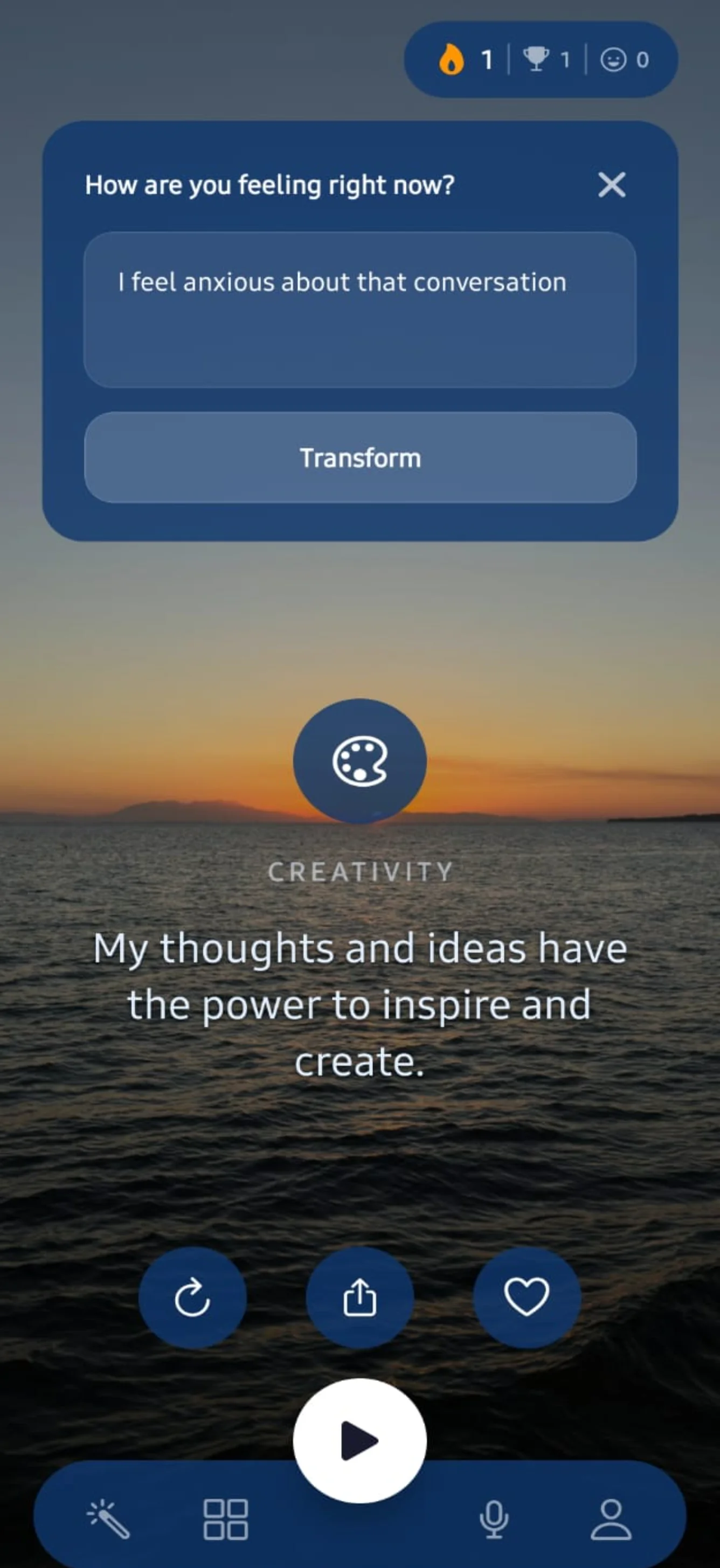
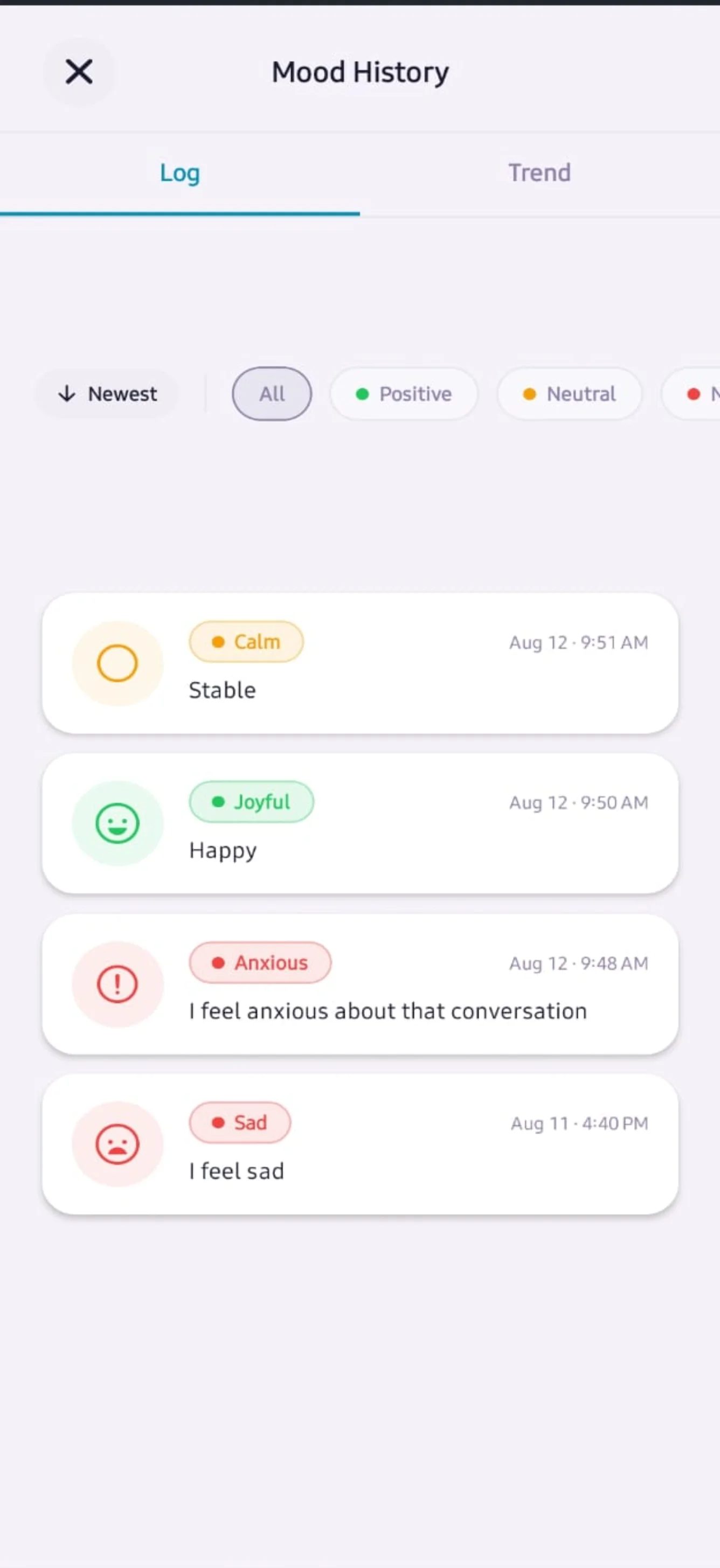
These six are a starting point. In the app you describe your own moment in your own words, and Anchor writes a CBT-style affirmation for exactly that, then a voice you picked from the library reads it aloud. It works in 29 languages, and a home-screen or lock-screen widget keeps today’s affirmation one tap away.
Questions
Does gratitude journaling actually work?
The research is generally supportive for wellbeing, with the caveat that specificity and genuine feeling matter more than frequency. Listing the same three abstractions daily tends to fade into a chore. Naming one concrete thing that actually happened works better than repeating categories.
What if I don't feel grateful?
Then don't force it — forced gratitude reliably backfires and often adds guilt on top of whatever you were already feeling. On hard days the honest version is smaller: noticing one neutral-to-good detail without requiring yourself to feel moved by it.