Affirmations for Anxiety
Anxiety doesn't respond well to being told it's irrational. It responds to being met. The affirmations below aren't about forcing calm — they're about giving your nervous system something steadier to hold while the wave passes.
Six affirmations for anxious moments
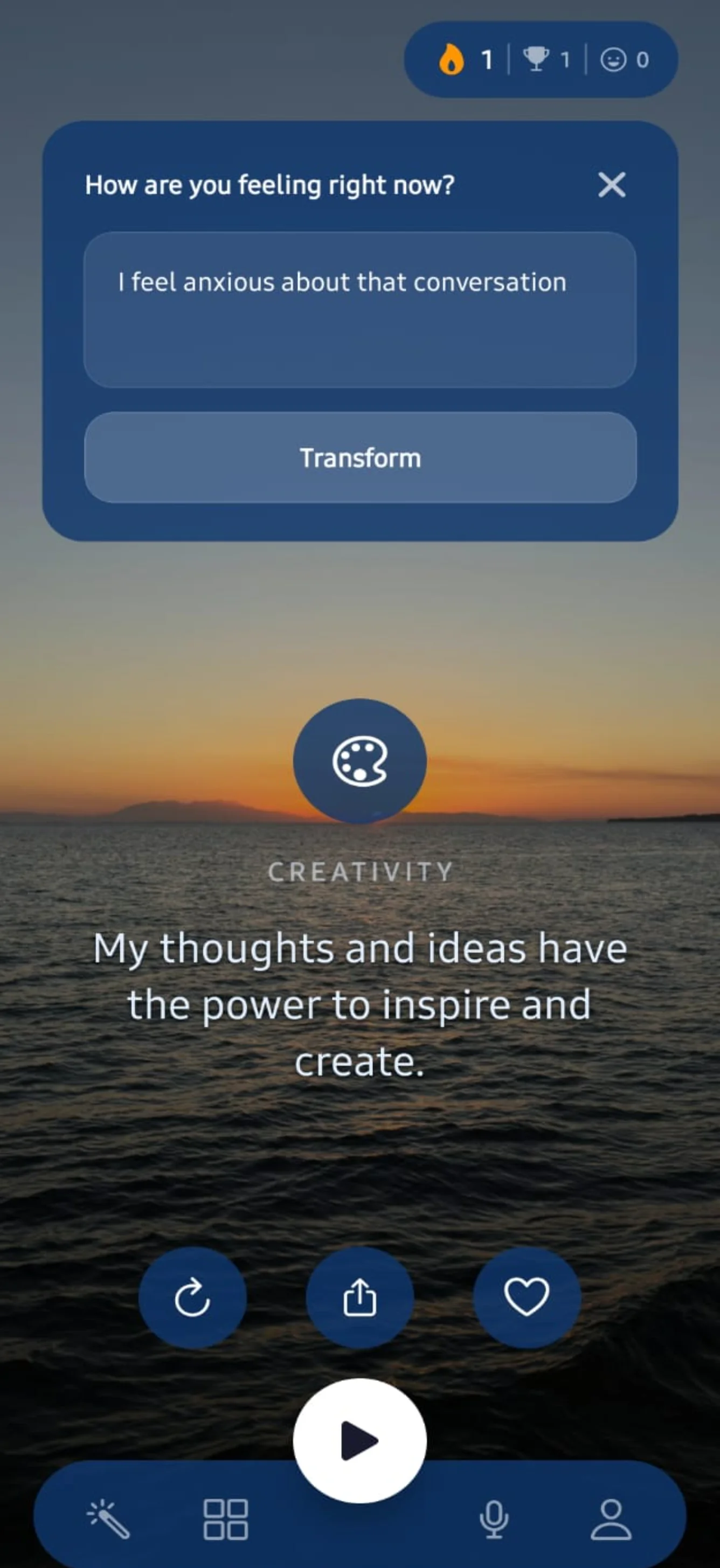
Most affirmations fail with anxiety because they overclaim. 'I am completely calm' is a sentence your body knows is false, and the mismatch makes the spiral worse. What works is language that acknowledges the feeling and then widens the frame around it — this is happening, it is uncomfortable, and it is survivable. That's the shape of a cognitive-behavioural reframe, and it's what Anchor writes for you: an affirmation matched to the specific feeling you're in, spoken aloud so you're listening rather than performing.
How Anchor writes yours
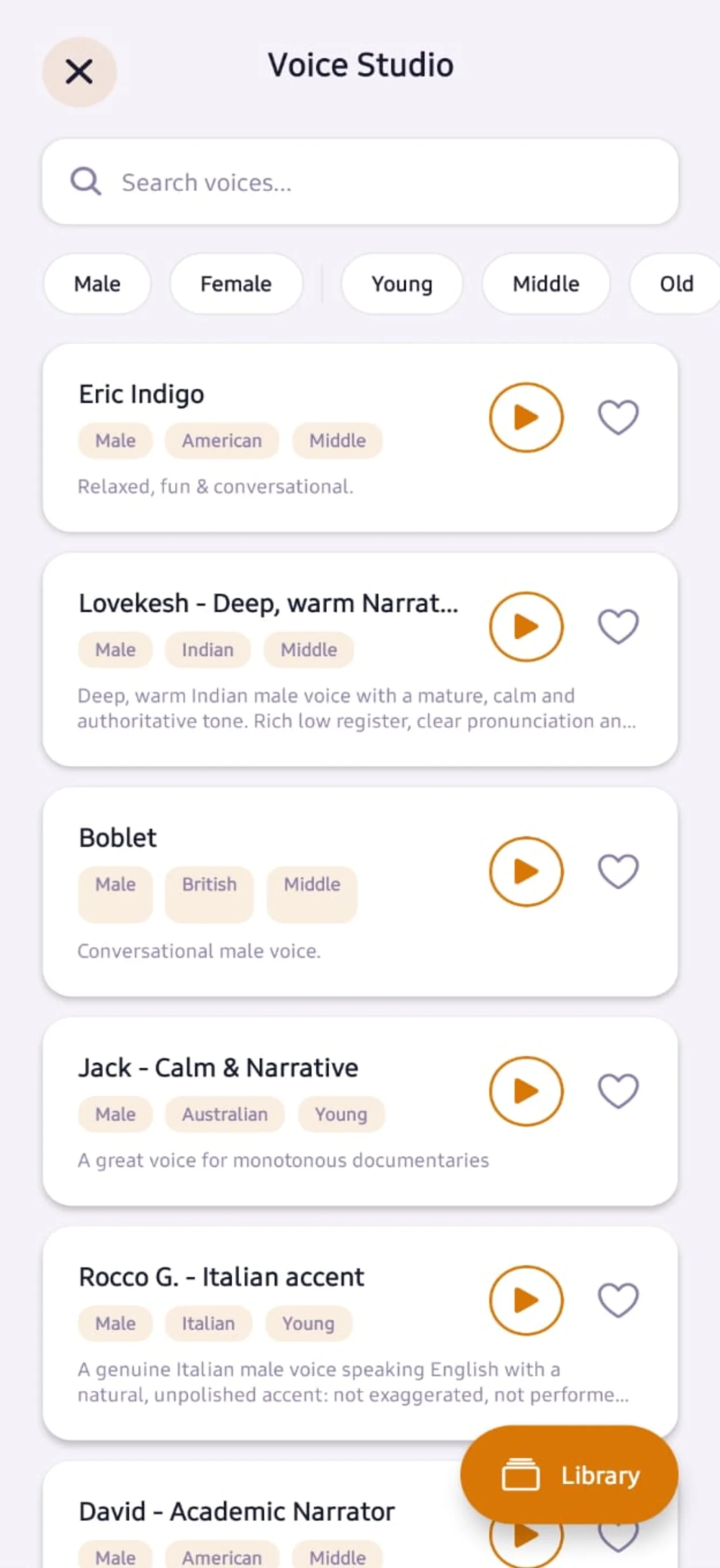
These six are a starting point. In the app you describe your own moment in your own words, and Anchor writes a CBT-style affirmation for exactly that, then a voice you picked from the library reads it aloud. It works in 29 languages, and a home-screen or lock-screen widget keeps today’s affirmation one tap away.
Questions
Do affirmations actually help with anxiety?
They help when they're believable. Research on self-affirmation suggests the benefit comes from widening perspective under threat, not from repeating something you don't accept. An affirmation your mind rejects ('I am not anxious') tends to backfire, while one that acknowledges reality and adds context ('this is uncomfortable and it will pass') gives the mind somewhere to go. That's why Anchor writes affirmations matched to the feeling you're actually in.
What should I say to myself during an anxiety spike?
Keep it short and physical. Something like 'this feeling is loud, but it is not a fact', or 'I just have to get through the next minute'. Long, elaborate scripts are hard to hold onto when you're activated. Pick one sentence, say it aloud, and let the exhale be slower than the inhale.
How often should I use anxiety affirmations?
Two moments matter most: during a spike, and on ordinary days when you're calm. The second one is what people skip — repeating a phrase when you're regulated is what makes it available to you when you're not. A minute a day beats an hour once a month.